- 0
- 652 words
Understanding the Physics Behind Bigfoot Track Depths
One of the recurring themes in Bigfoot lore concerns the size and depth of the creature’s footprints. Many reports highlight how impressively deep these prints are pressed into the earth—often noting that they are several inches deep, even in hard-packed soil—implying an enormous weight and size. For example, observers might comment, “The footprints were 2 inches deep, while my own boot prints barely made a mark!”
This widespread narrative prompts a closer examination of the physics involved in footprint formation. Specifically, it raises the question: does the depth of a footprint genuinely reflect the creature’s mass, or could other factors influence the impression?
Let’s explore the physics to clarify this.
The Physics of Footprint Depth
The depth of a footprint is fundamentally related to the pressure exerted by the foot upon the ground. Pressure, in physics terms, is calculated as force divided by area (Pressure = Force / Area).
Understanding Force and Area
- Force: In this context, force correlates with the weight (mass) of the creature exerted downward due to gravity.
- Area: The surface area of the foot that contacts the ground. A larger area distributes the same force over a bigger space, reducing pressure.
Applying the Concepts: A Hypothetical Bigfoot
Suppose we consider a typical alleged Bigfoot of approximately 800 pounds (roughly 360 kg). Let’s specify some approximate foot dimensions: 45 cm by 20 cm (about 18 inches by 8 inches). Assuming a rectangular shape for simplicity, the foot’s area becomes:
[ \text{Area} = 45\, \text{cm} \times 20\, \text{cm} = 900\, \text{cm}^2 ]
Converting to square meters:
[ 900\, \text{cm}^2 = 0.09\, \text{m}^2 ]
The force exerted is equivalent to the weight, which in metric units (assuming gravity as 9.8 m/s²) equates to:
[ \text{Force} = 360\, \text{kg} \times 9.8\, \text{m/s}^2 \approx 3,528\, \text{Newtons} ]
Calculating the pressure:
[ \text{Pressure} = \frac{\text{Force}}{\text{Area}} = \frac{3,528\, \text{N}}{0.09\, \text{m}^2} \approx 39,200\, \text{Pa} ]
In terms of direct comparison, this pressure is significant—far greater than what we typically experience.
How Does This Compare to a Human?
Now, consider an average human with foot dimensions of approximately 27 cm by 10 cm (about 10.5 inches by 4 inches). The area:
[ 27\, \text{cm} \times 10\, \text{cm} = 270\, \text{cm}^2 = 0.027\, \text{m}^2 ]
At a weight of 100 kg (roughly 220 pounds), the force is:
[ 100\, \text{kg} \times 9.8\, \text{m/s}^2 = 980\, \text{N} ]
The pressure exerted:
[ \frac{980\, \text{N}}{0.027\, \text{m}^2} \approx 36,300\, \text{Pa} ]
Implication: the pressure applied by the average human foot under these assumptions is remarkably similar to that of the hypothetical Bigfoot.
What Does This Mean?
Given these calculations, the difference in force and pressure between a human and this fictional Bigfoot isn’t as substantial as popular stories suggest. Large footprints with significant depth are unlikely solely due to the creature’s weight unless additional factors are involved.
Possible Explanations for Deep Tracks
- Faked or Altered Evidence: Some deep footprints could result from deliberate manipulation, using tools or molds.
- Environmental Conditions: Soft or marshy ground can cause even small weights to produce deep impressions.
- Exaggeration or Storytelling: Over time, descriptions can become exaggerated, leading to misconceptions about depth and size.
Conclusion
Simple physics demonstrates that the relationship between a creature’s weight, foot area, and resulting footprint depth does not support the notion that large footprints necessarily indicate extraordinary size or weight. Deep tracks may often be explained through environmental factors, fabrication, or exaggeration, rather than the actual presence of a creature of immense stature.
Summary
- Footprint depth is primarily determined by the pressure applied, which depends on weight and area.
- When considering comparable foot surfaces, the force exerted by a Bigfoot and an average human does not differ enough to account for significantly deeper footprints.
- Alternative explanations such as ground conditions or fabrication often better explain the reported depth of footprints than extraordinary size alone.
By applying physics principles, we can better understand and critically evaluate the evidence surrounding Bigfoot footprints, moving beyond legends to a more scientific perspective.
Author

Related posts

Is anyone else tired of all the creepypasta characters and Skinwalkers being brought up constantly in the comments?
- 0
- 296 words
Addressing the Overrepresentation of Creepypasta and Mythical Entities in Online Discussions In the realm of online cryptozoology communities, engaging conversations often revolve...
Read out all
Is the Bodette Film completely wiped out from the internet?
- 0
- 322 words
The Mystery of the Bodette Film: Is It Truly Wiped from the Internet? The internet is a vast and constantly evolving landscape,...
Read out all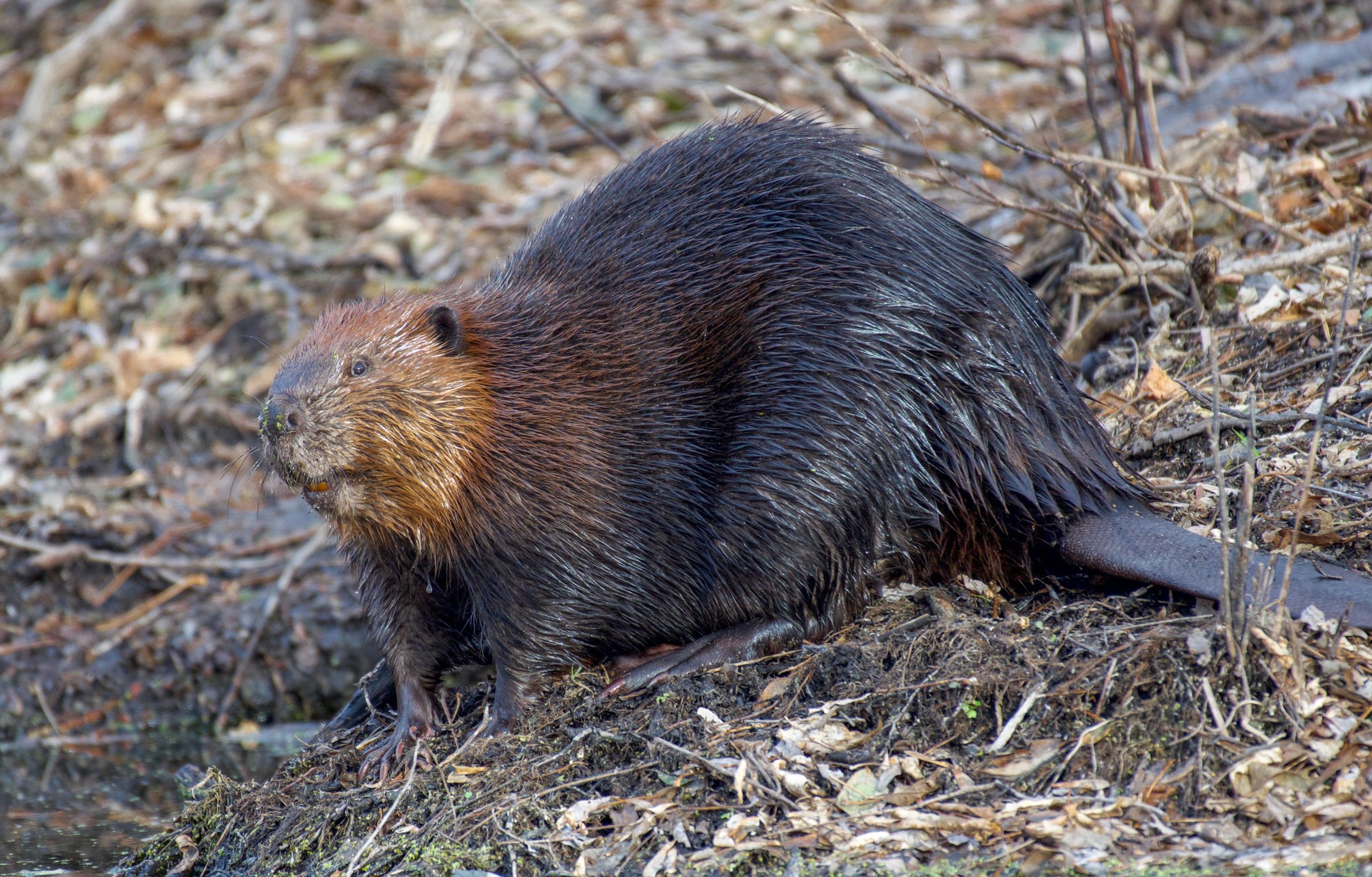
Is it possible to have seen an extinct Giant Beaver? Didn’t know if it’s classified as cryptid.
- 0
- 424 words
Could You Have Encountered an Extinct Giant Beaver? Exploring a Mysterious Sightning Throughout history, sightings of unusual or elusive creatures often spark...
Read out all
Do you think creatures like the Kappa from Japanese folklore could have been based on real encounters? 😁
- 0
- 310 words
Exploring the Origins of Legendary Creatures: Could the Kappa of Japanese Folklore Be Based on Real Encounters? Throughout history, folklore has served...
Read out all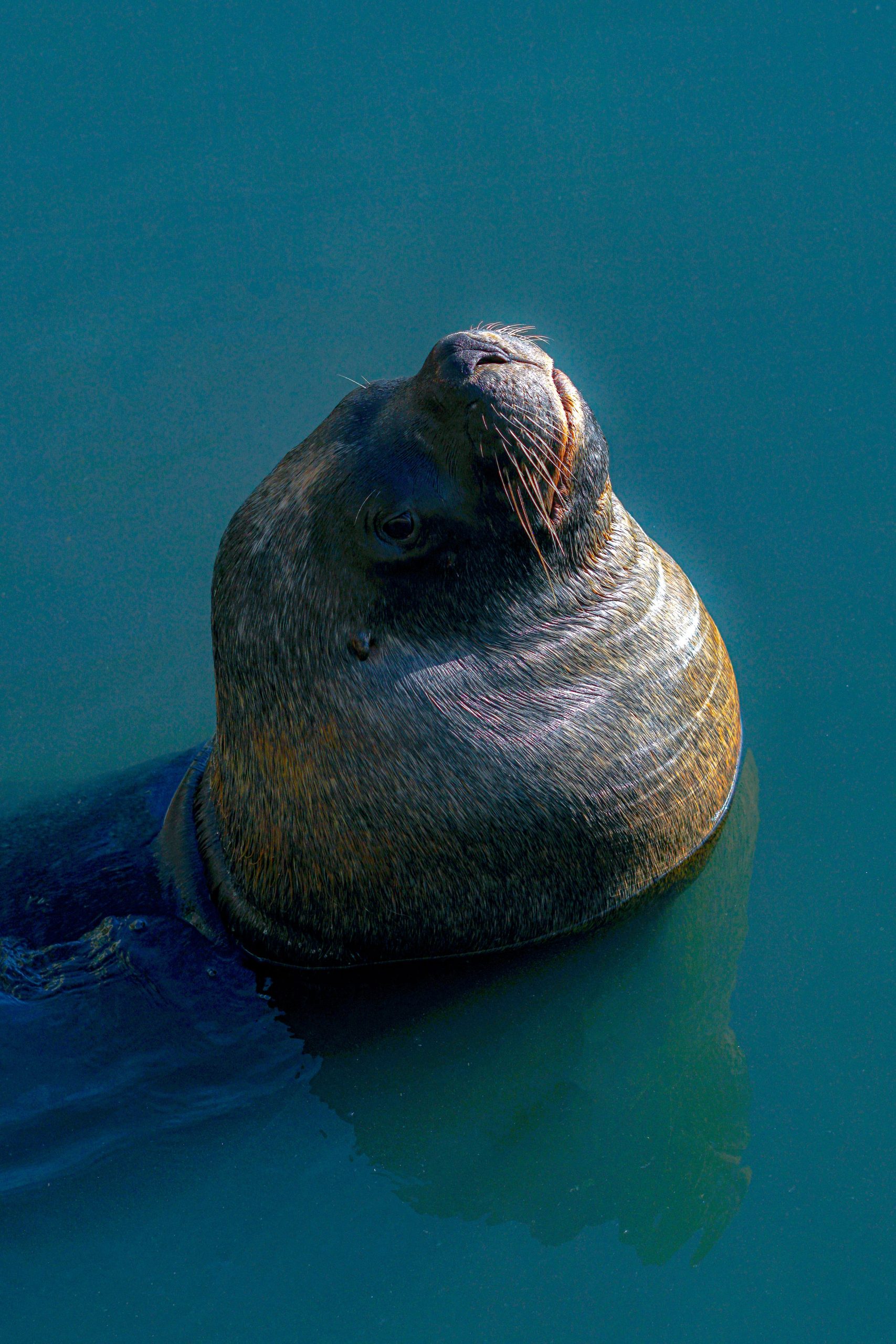
Alleged Steller’s Sea Cow photographed in Norway, 1987
- 0
- 523 words
Exploring the 1987 Photograph Allegedly Depicting a Steller’s Sea Cow in Norway In the realm of cryptozoology and maritime folklore, few images...
Read out all
Excluding animals that are now known to exist, what are your favorite “normal looking” cryptids?
- 0
- 465 words
Exploring the Fascination with “Normal-Looking” Cryptids: Fascinating Variations of Known Animals Cryptids—mysterious creatures believed to exist outside the realm of verified science—have...
Read out all