- 0
- 810 words
Are the Supergiant Goblin Sharks of the Gulf of Mexico Considered Cryptids?
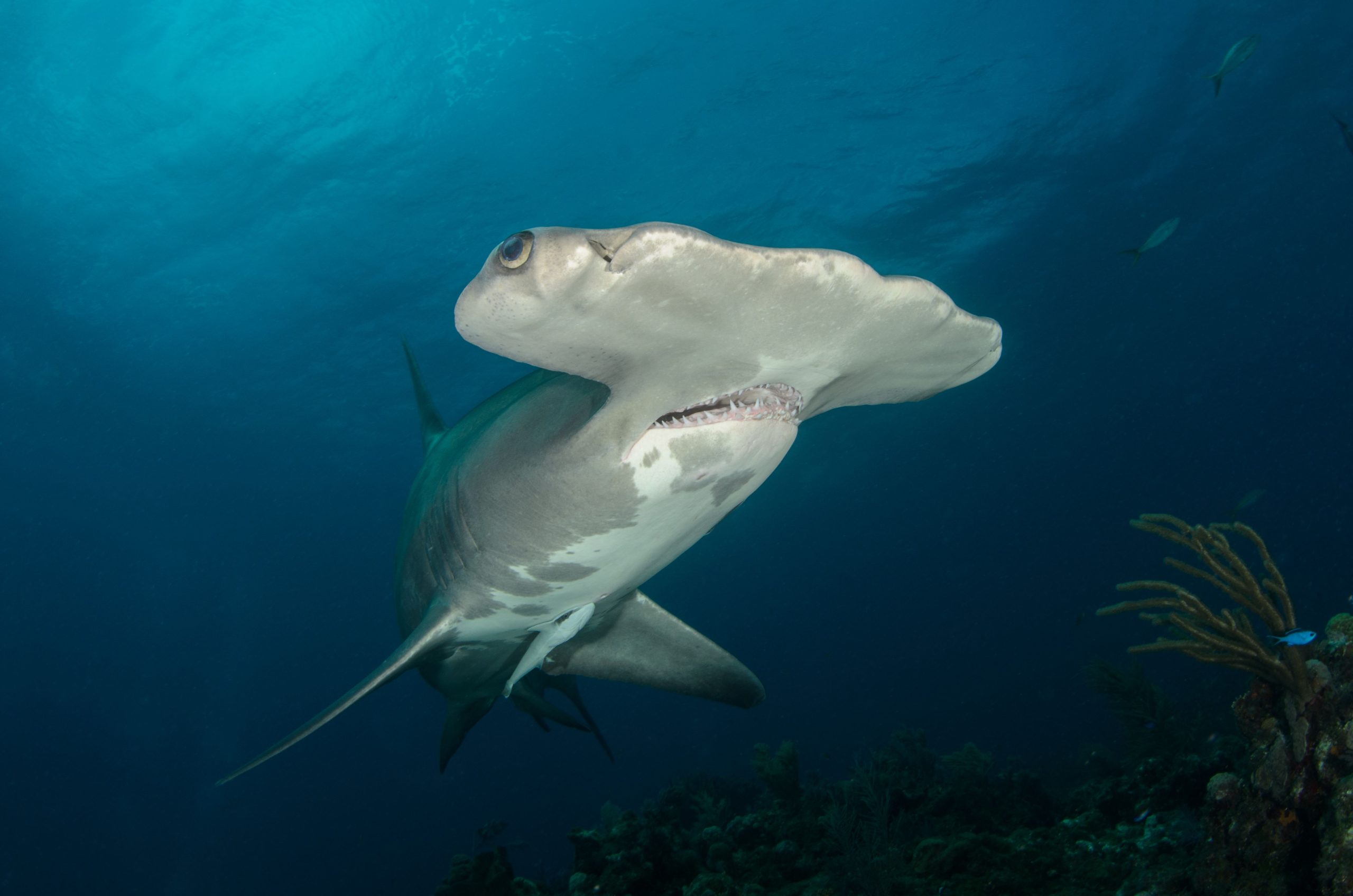
The mysterious world beneath the ocean’s surface continually offers surprises, and among its most intriguing inhabitants are the elusive goblin sharks. Known to marine science since 1898, these extraordinary creatures have remained shrouded in mystery, particularly due to their exceptional rarity and elusive nature. Recent notable encounters with giant specimens off the Gulf of Mexico raise compelling questions about their true nature and whether these sharks might belong to the realm of cryptids.
The Tale of the Gulf’s Supergiant Goblin Sharks
Historically, goblin sharks have been considered small-to-moderate-sized deep-sea species, rarely exceeding 4 meters in length. However, the discovery of two exceptionally large specimens from the Gulf of Mexico has challenged traditional perceptions.
The 2000 Encounter
On July 25, 2000, commercial fishermen operating off the Gulf of Mexico hauled up a massive goblin shark, likely female, entangled in the lines attached to a crab trap. The shark was probably already deceased when brought to the surface. Unfortunately, the crew dissected the animal on the spot, discarding all remains aside from its jaws—possession of which they claim to still hold. This specimen’s size was reportedly over 6 meters, with some sources suggesting it may have approached 7 meters, though such estimates lack definitive scientific backing and should be approached cautiously.
The 2014 Discovery
More recently, on April 19, 2014, another enormous goblin shark was captured in a trawling net off the southeast Gulf. Remarkably, this specimen was alive upon discovery, measured approximately 4.7 meters, and was released after documentation. Unlike its 2000 predecessor, this shark was examined in detail and is recognized as the largest goblin shark to have been scientifically studied to date.
Size and Distribution: Anomalies in the Deep
The sizes of these sharks are extraordinary. Typically, goblin sharks are considered medium-sized, with the maximum length for most individuals around 3 or 4 meters. The Gulf’s supergiants, surpassing 6 meters and possibly reaching 7 meters, represent an outlier.
Interestingly, these two giants are the only goblin sharks documented in the Gulf of Mexico, hinting at a potential localized population or even a distinct subspecies. This leads to fascinating questions:
- Could these be unique, regional giants?
- Are they part of a hitherto unknown, possibly cryptid, species?
- What environmental factors in the Gulf might contribute to their extraordinary growth?
Adding to this intrigue, a large (approximately 4.7 meters) pregnant goblin shark was captured off Taiwan in June 2023, with evidence suggesting it was carrying six pups. This find demonstrates that such large sizes are attainable, possibly linked to reproductive status or environmental factors.
Are These Sharks Cryptids?
Cryptids are creatures believed by some to exist based on anecdotes or limited evidence but lack conclusive scientific validation—examples include the Loch Ness Monster or Bigfoot. The supergiant goblin sharks from the Gulf of Mexico provoke similar debates.
The primary reason for this speculation is the scarcity of verifiable, high-quality evidence. The few existing photographs and measurements are largely unprofessional and limited. No recent sightings or captures have confirmed these giants’ continued presence, and their status remains uncertain. Without live specimens or definitive scientific documentation, some may argue that these sharks occupy a liminal space between known species and cryptids—a tantalizing mystery lurking at the edge of current scientific understanding.
Scientific Perspectives and Future Possibilities
The rarity of these giants hampers comprehensive study. Nevertheless, their existence urges questions about deep-sea biodiversity and adaptive biology:
- Are these specimens part of a hidden, larger population in the Gulf?
- Might they represent a new, unrecognized species adapted specifically to the Gulf’s unique conditions?
- What ecological or evolutionary pressures could drive such gigantism in a deep-sea shark?
Current knowledge is insufficient to answer these questions definitively, and the lack of recent sightings keeps these sharks in the realm of the enigmatic.
Conclusion
The supergiant goblin sharks of the Gulf of Mexico exemplify the ocean’s capacity for surprises and deepen the mystery surrounding deep-sea life. While their existence is supported by limited but credible evidence, the paucity of recent data leaves open the question of whether they belong strictly to known marine biodiversity or straddle the line into cryptid territory.
As ocean exploration advances and technology improves, future discoveries may shed light on these giants’ true nature. Until then, they remain captivating enigmas—remarkable specimens that challenge our understanding of marine size limits and evolutionary adaptation.
Further Reading and References
- First record of the goblin shark, Mitsukurina owstoni, in the Gulf of Mexico. ScienceDirect
- New record of a goblin shark Mitsukurina owstoni in the western North Atlantic Ocean. ScienceDirect
- Giant goblin sharks overview. Incertae Sedis Blog
- Evolutionary pathways towards gigantism in sharks and rays. Swansea University Research
- Record of a large pregnant goblin shark off Taiwan. Taiwan News
Disclaimer: The extraordinary sizes and limited observations of these sharks mean that much remains to be discovered. Their classification as species or cryptid-like anomalies awaits further scientific validation.
Author

Related posts

Is anyone else tired of all the creepypasta characters and Skinwalkers being brought up constantly in the comments?
- 0
- 296 words
Addressing the Overrepresentation of Creepypasta and Mythical Entities in Online Discussions In the realm of online cryptozoology communities, engaging conversations often revolve...
Read out all
Is the Bodette Film completely wiped out from the internet?
- 0
- 322 words
The Mystery of the Bodette Film: Is It Truly Wiped from the Internet? The internet is a vast and constantly evolving landscape,...
Read out all
Is it possible to have seen an extinct Giant Beaver? Didn’t know if it’s classified as cryptid.
- 0
- 424 words
Could You Have Encountered an Extinct Giant Beaver? Exploring a Mysterious Sightning Throughout history, sightings of unusual or elusive creatures often spark...
Read out all
Do you think creatures like the Kappa from Japanese folklore could have been based on real encounters? 😁
- 0
- 310 words
Exploring the Origins of Legendary Creatures: Could the Kappa of Japanese Folklore Be Based on Real Encounters? Throughout history, folklore has served...
Read out all
Alleged Steller’s Sea Cow photographed in Norway, 1987
- 0
- 523 words
Exploring the 1987 Photograph Allegedly Depicting a Steller’s Sea Cow in Norway In the realm of cryptozoology and maritime folklore, few images...
Read out all
Excluding animals that are now known to exist, what are your favorite “normal looking” cryptids?
- 0
- 465 words
Exploring the Fascination with “Normal-Looking” Cryptids: Fascinating Variations of Known Animals Cryptids—mysterious creatures believed to exist outside the realm of verified science—have...
Read out all